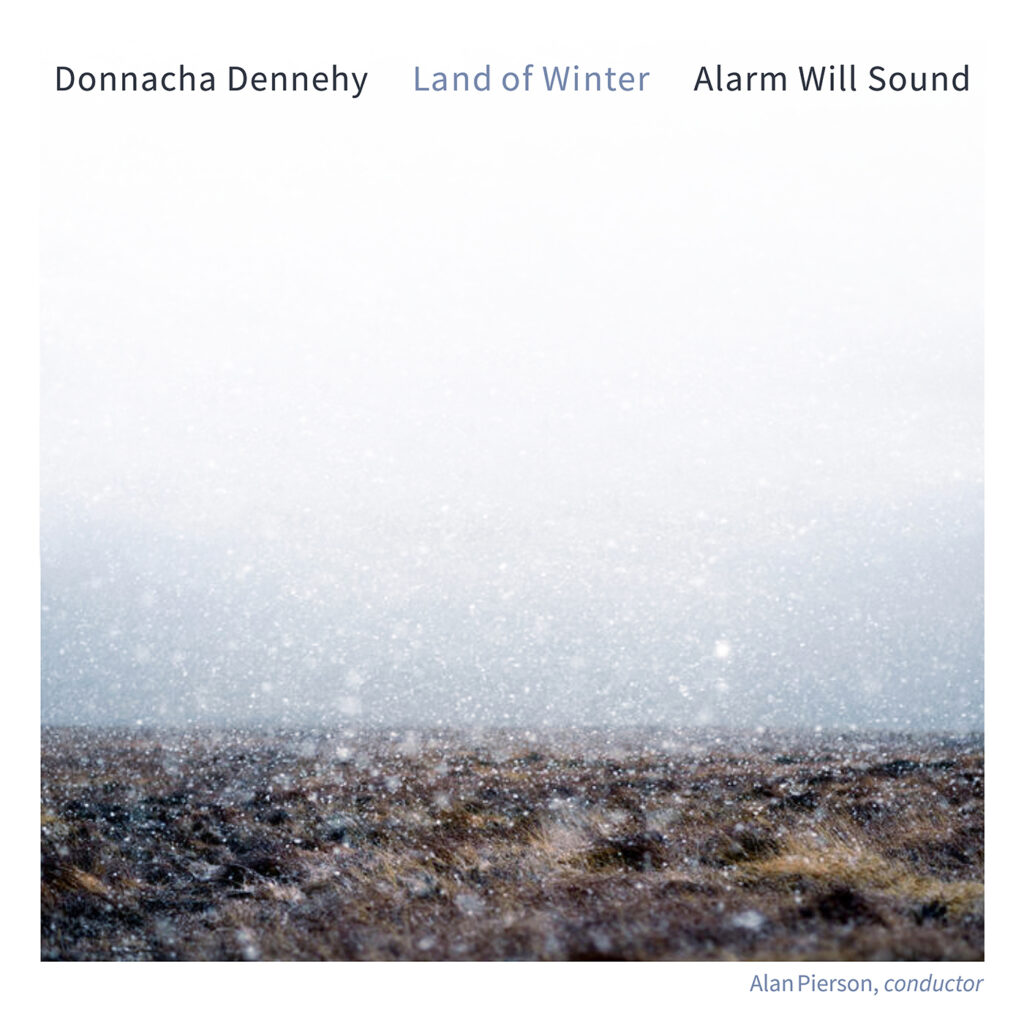
I had a small epiphany today about Land of Winter (Donnacha Dennehy’s large-scale work for chamber orchestra, written for and recorded by Alarm Will Sound.).
Or maybe, given my day job, an alarm sounded.
The piece, in many ways, deals with misunderstandings.
Donnacha often talks about how the Romans called Ireland Hibernia: the “Land of Winter.” From a distance, it must have seemed perpetually cold, grey, and forbidding. But anyone who has actually spent time there knows that’s not quite true. It’s temperate. Changeable. More about light than cold, and about how radically that light transforms across the year. From what I understand (I haven’t spent much time in Ireland!), at the height of winter and summer, those shifts can feel genuinely extreme.
But the name stuck, even if the reality didn’t quite fit.
Something similar happens every time I describe Land of Winter to people.
When I say it’s by an Irish composer, there’s often an almost imperceptible mental pivot: fiddles, reels, Riverdance, traditional Irish music. None of that is wrong, exactly, but none of it really applies here either. Dennehy’s music lives in a very different sound world, one shaped by spectral harmony, electronics, and contemporary classical techniques, even as a deep sense of place quietly informs the piece in ways that resist anything overtly “traditional.”
And yet, those assumptions are understandable. We all reach for familiar reference points. We label things quickly so we know how to listen, what to expect, how to place them in a mental box.
Land of Winter quietly resists that. It asks for a slower kind of listening. It’s less about postcard images of Ireland and more about time passing, light changing, seasons overlapping. It’s not winter as a stereotype, but winter as a lens. Something you look through rather than something you endure.
Maybe that’s what keeps pulling me back to the piece. It lives in the gap between expectation and experience. Between the name and the reality. Between what we think we’re hearing and what’s actually there if we stay with it long enough.
And maybe that’s true of more things than just this piece of music.